share to:


Jake Quinn
THE Mangrove Nature Reserve in Futian District offers a calm and relaxed environment where people can escape from the hustle of the city and enjoy an afternoon of hiking, cycling or bird-watching.
The park’s popularity became apparent when I visited it during my travels in Shenzhen this summer. There were scores of people out for an evening stroll along the coast, all of them taking time to appreciate the beauty of the moon, stars and the city lights. I found the whole experience to be very relaxing and I would urge anyone who wants to take in picturesque views or just have a good day/night out to give the mangrove park a go.
But the mangroves arguably serve a more important role in Shenzhen than public enjoyment. Mangroves all around the tropics and subtropics are ecological treasure troves supporting multitudes of species of mammals, birds, amphibians, reptiles and fish. The Futian mangrove is no different. The mangrove wetlands straddling Shenzhen and Hong Kong’s Mai Po are considered an important habitat for nearly 200 bird species comprising 400,000 individuals. Of particular significance is the black-faced spoonbill, which takes sanctuary in the Futian mangrove reserve during winter. The mangrove reserve holds about 300 out of the 2,500 or so black-faced spoonbills remaining in the wild, while the Mai Po wetlands in Hong Kong support a similar number.
Back in the 1980s, Shenzhen had more than 530 hectares of mangroves, but now it has less than a quarter of that left. Why have the mangroves shrunken so much? Who’s to blame? The destruction of mangroves is not confined to Shenzhen, or even China — it is an international phenomenon. In Shenzhen in particular, rapid urbanization during the 1980s led to deforestation on a large scale. In the 1990s, an industrial boom led to river pollution that introduced toxic chemicals into mangroves downstream. The result has been a drastic reduction in mangrove forest, threatening migratory bird populations and increasing chances of a future natural disaster.
Like me, you probably still have vivid images of the Indian Ocean tsunami on Dec. 26, 2004, which killed more than 230,000 people in 14 countries. The conservation and extension of the Shenzhen mangroves regained prime concern after that disaster. In 2005, plant species were reintroduced to combat local extinctions, increase biodiversity, reforest the area and improve protection of the coast.
But the cause of the loss of species was not addressed. The biggest threat to the remaining mangroves at the time of the tsunami was pollution from industrial effluents. To prevent further damage and to clean up the polluted water, a water treatment factory was built in 2008. The project to clean the river will be completed this year, and so far has led to vast improvements.
On the eastern side of the mangroves, a new public park is expected in 2014. This is a manifestation of the government’s plans to educate the general public about the importance of environmental protection. This highlights a key new factor in conservation. The better educated we all are about the environment, the more likely we are to think twice before dropping litter, driving when we could cycle or throwing newspapers in general trash cans rather than recycling them.
We must be aware that a constant battle is taking place. Shenzhen is a city with big plans and ideas. Some of the biggest threats to the remaining mangroves are infrastructure projects and commercial property development. Expansion is something Shenzhen has to do to continue its economic development. Balancing this with environmental conservation is a big challenge. In an effort to preserve the mangrove, Futian officials have redirected Binhai Boulevard around the ecological reserve, and have pledged to increase the size of the mangroves through reforestation.
The recent efforts of the Futian government haven’t gone unnoticed. The national government is rewarding Futian for its efforts and policies.
Futian appears to be a district filled with optimism. The city as a whole is constantly adapting, investing in new technologies and implementing modern architecture. Nothing highlights this more than the Metro system, which really impressed me with its sleek modern design and efficiency. It appears that in this busy city, no one place stays the same. However, what must not change are the mangroves. They hold a special place not only in Shenzhen but also on planet Earth.
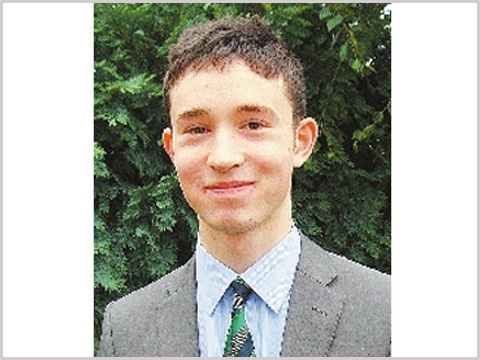
Jake Quinn, a 17-year-old student in London, England, is a keen traveler and nature enthusiast who is interested in environmental protection. He received a sponsorship award from his school to visit Shenzhen on a three-week study trip in July 2013 to learn more about the city and China as a whole.
附件:JQ1